Corgi Back Problems: IVDD, Stairs and How to Protect That Long Back
Please see your vet. This guide is general education, not a diagnosis or treatment plan. If your corgi seems unwell, call your veterinarian. If it looks like an emergency, go to an emergency vet right away.
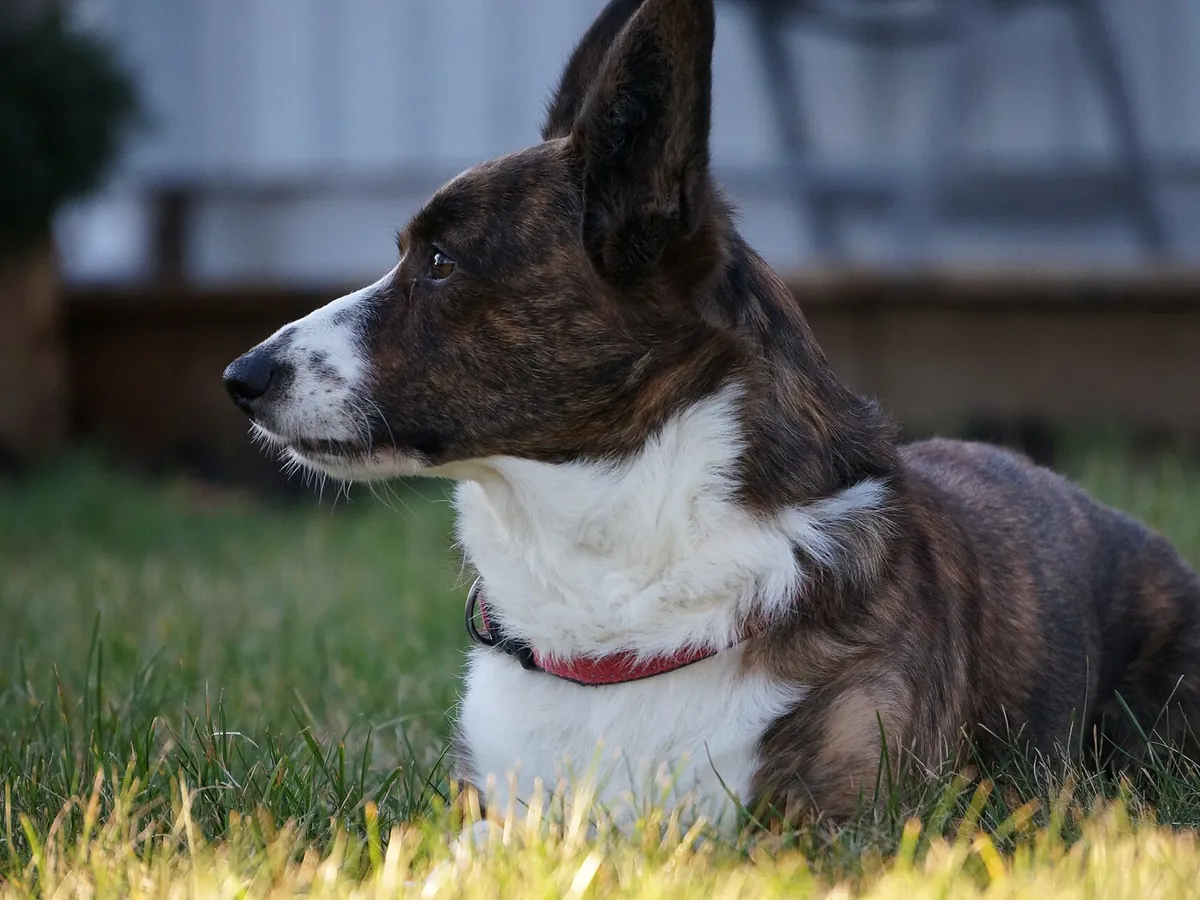
Photo: GrzegorzWicher via Wikimedia Commons, CC BY-SA 4.0
🐾 Getting ready for a puppy? Try the interactive corgi puppy checklist — free, no email required.
Corgis are built long and low. That silhouette is part of what makes Pembroke and Cardigan Welsh Corgis such capable herding dogs, and it is also why spinal care deserves lifelong attention. Intervertebral disc disease (IVDD) can turn a minor jump into a medical emergency when a disc is already degenerating.
Any new back pain, stiffness or hind-end weakness deserves a prompt veterinary exam. Disc problems can move from discomfort to paralysis within hours. This guide is general education, not a diagnosis or treatment plan.
What the breed standards say about the long back
The AKC Pembroke standard describes a moderately long, low-set dog: the distance from the withers to the base of the tail should be about 40% greater than the height at the withers. The AKC Cardigan standard likewise calls for a long body in proportion to height, with short, curved forearms and heavy bone for the size.
Those proportions are the breed’s working design. They are not, by themselves, a diagnosis. They do explain why everyday habits that spare the spine matter for these dogs.
What IVDD is
According to VCA Animal Hospitals, discs between the vertebrae act as shock absorbers. When a disc bulges or ruptures, material can press on the spinal cord or nerve roots and cause pain, weakness or paralysis. VCA describes Hansen type I disease as an acute rupture (extrusion) and Hansen type II as a more chronic bulging without full rupture.
VCA’s disc-disease overview adds that degeneration can be slow, but the rupture itself may follow a minor fall or a relatively small jump, and some dogs go from walking to paralysis in less than an hour. Cornell’s Riney Canine Health Center explains that aging discs can calcify and that trauma can squish or rupture a disc so material presses on the cord.
VCA notes that breeds with long backs and shortened, bowed legs show faster disc deterioration than other breeds, and that obesity plus repeated traumatic events may raise risk in predisposed dogs. Cornell lists common IVDD breeds such as Dachshunds and several other short-legged or long-backed types; ask your vet how corgi anatomy and your dog’s history fit that picture.
Everyday habits that protect the back
| Risk to reduce | Practical habit | Source-backed reason |
|---|---|---|
| Extra body weight | Keep a lean body condition with your vet | VCA lists obesity as a risk enhancer; Cornell says keep dogs trim and fit |
| Furniture and car jumps | Use a non-slip ramp or lift the dog | Cornell advises minimizing jumps on/off beds, sofas and decks; VCA notes small jumps can accompany rupture |
| Stair running | Limit unsupervised flights; teach a calm pace | Cornell recommends minimizing stair time |
| Slick floors | Add runners or mats | Reduces slips that twist the spine during play |
| Improper lifting | Support chest and hindquarters so the back stays level | Keeps the spine from dangling unsupported |
Vet tip: Never give human pain medicines such as ibuprofen, naproxen or acetaminophen. They are toxic to dogs and can complicate emergency care. Call your vet or an emergency clinic instead.
For weight management details, see keeping a corgi at a healthy weight.
Stairs, puppies and high-impact play
Cornell specifically recommends minimizing stairs and furniture jumps. We do not invent a universal “no stairs ever” rule or a fixed age cutoff, because neither VCA nor Cornell states one for corgis. Ask your veterinarian what is safe for your puppy or adult dog, especially before growth is finished.
In general, prefer:
- Back-friendlier movement: leash walks on even ground, sniff walks, puzzle feeders and other low-impact play
- Higher-impact habits to limit: repeated leaping for flying discs, hard skidding turns on slick floors, and unsupervised racing up and down stairs
If your dog already has a back history, ask about rehab options. VCA notes that physiotherapy (including modalities such as therapeutic laser and hydrotherapy in some cases) is part of recovery after disc disease.
Emergency signs
Contact an emergency veterinary hospital immediately for:
- Crying out, trembling, or refusing to move the neck or back
- A rigidly held or “roached” back
- Wobbly rear gait, knuckling, or dragging the hind legs
- Sudden paralysis
- Loss of bladder or bowel control
VCA stages disc disease from mild pain through paralysis with loss of feeling, and stresses that dogs with severe stages need rapid specialist imaging and, often, surgery. Cornell likewise says not to wait when surgery is recommended, because delayed pressure on the cord can reduce the chance of recovery.
Hind-end weakness that is slow and non-painful can also look like degenerative myelopathy. Only a veterinarian can sort those conditions apart. This guide cannot replace an exam of your dog.
Frequently asked questions
Are Welsh corgis prone to back problems?
Corgis are long-backed, short-legged dogs according to the AKC breed standards. VCA Animal Hospitals notes that breeds with long backs and shortened, bowed legs show faster disc deterioration than other breeds, and Cornell's canine health center lists minimizing stairs and furniture jumps among practical ways to lower spinal-injury odds. Ask your vet how that applies to your own dog.
Should my corgi use stairs every day?
Cornell University's Riney Canine Health Center recommends minimizing time spent going up and down stairs as one way to reduce the odds of spinal injury. How much stair use is safe for your dog depends on age, weight and back history, so ask your veterinarian rather than following a one-size rule.
Are pet ramps worth it for corgis?
Ramps and low steps are a practical way to avoid the furniture and vehicle jumps that Cornell lists among risks to reduce, and that VCA notes can accompany disc rupture when discs are already degenerating. Choose a non-slip ramp suited to your dog's height and confirm the setup with your vet if your dog already has back pain.
Can a corgi puppy jump off the couch?
VCA explains that disc rupture often follows a minor fall or relatively small jump when the disc has already been degenerating. Cornell likewise advises minimizing jumping on and off beds and sofas. Teach puppies to use a ramp or wait to be lifted, and ask your vet about activity limits while growth plates are still open.
What are emergency signs of a slipped disc?
Seek emergency veterinary care for crying in pain, a rigidly held or arched back, a wobbly rear gait, knuckling, dragging the hind legs, sudden paralysis or loss of bladder control. VCA and Cornell both stress that severe disc disease can progress quickly and that waiting can worsen the outlook for recovery.
A quick note: this guide is general information from published sources, written by dog lovers, not a veterinarian. Your own vet knows your dog's history, so check with them before changing food, exercise or treatment.
Sources
Keep reading

Corgi Obesity: How to Keep a Food-Loving Corgi at a Healthy Weight
Keep a corgi at a healthy weight with vet-backed body-condition checks, measured meals, a treat budget and gentle daily movement that protects joints.
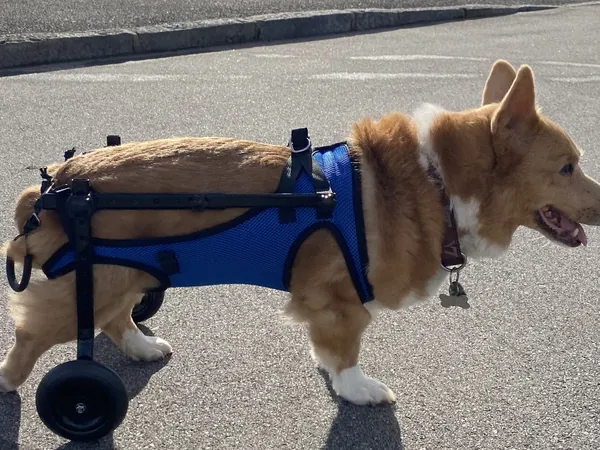

Degenerative Myelopathy in Corgis: Signs, Testing and What Owners Can Do
Degenerative myelopathy in corgis explained with vet-backed early signs, SOD1 testing limits, supportive mobility care and when to call your vet.